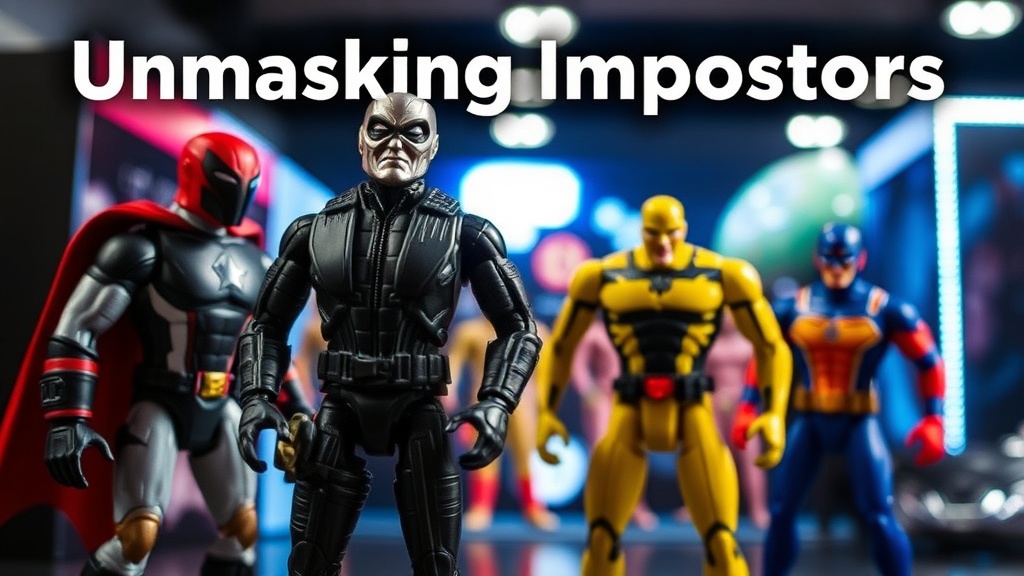
Unmasking Impostors: Identifying Counterfeit Action Figures Before You Buy

Unmasking Impostors: Identifying Counterfeit Action Figures Before You Buy
Ever bought what you thought was a rare or beloved action figure, only to unbox it and feel a pang of disappointment? Many collectors face the disheartening reality of counterfeit toys—figures that look almost right, but just aren't. How can you be sure you're getting an authentic piece for your collection and not a cheap, often shoddy, imitation? This guide walks you through the tell-tale signs of fake action figures, equipping you with the knowledge to safeguard your collection and your wallet. We'll cover everything from suspicious online listings to the minute details on a figure's sculpt and paint, ensuring you can make informed decisions every time you add to your prized display.
Why are so many fake figures out there, and what's the risk?
The allure of the action figure market is strong, creating a fertile ground for opportunists. High demand for popular characters, combined with the often-limited availability of legitimate products, drives some consumers to seek out cheaper alternatives. This is where counterfeiters step in, often exploiting unregulated online marketplaces to peddle their wares. These fakes aren't just a nuisance; they carry significant risks.
Financially, a counterfeit figure is a worthless addition to a collection. It holds no resale value and can’t be considered an investment. You're effectively throwing your money away on something that will only depreciate further. Beyond the monetary aspect, there are serious safety implications. Authentic toys, especially those sold in regulated markets like the U.S. and E.U., undergo rigorous safety testing. Counterfeits, however, bypass these crucial checks, often containing toxic chemicals—like lead or cadmium—or featuring poorly constructed parts that can break off and become choking hazards. Imagine the potential danger if a child were to handle one of these unregulated products. The threat extends to shoddy construction, poor articulation, and paint that flakes or melts, all of which diminish the joy of collecting and can even damage other figures in your display.
How can you tell a real action figure from a fake?
Distinguishing genuine articles from clever fakes requires a keen eye and a methodical approach. It’s a bit like detective work; you need to look for inconsistencies and deviations from the expected. The good news is that counterfeiters rarely get everything right. Here’s how to investigate:
Scrutinize the Listing and Seller Online
Before you even click 'buy,' the online listing itself often provides the first set of clues. What's the asking price? If a figure that typically commands a high price is listed for a fraction of its market value, that’s a major red flag. While everyone loves a deal, an offer that seems too good to be true almost always is. Research comparable sales for the figure you're eyeing.
Next, pay close attention to the seller. Is it an official retailer or a well-known, reputable store? Or is it an unknown third-party seller with a generic name and little feedback? Check their seller history, particularly focusing on negative reviews mentioning authenticity issues or poor product quality. Look for inconsistent product descriptions, poor grammar, or pixelated, low-quality images—especially if they look like stolen stock photos rather than actual pictures of the item for sale. Some sellers even try to mislead with vague descriptions like 'custom' or 'KO' (knock-off) to avoid directly calling it a fake while still profiting from its resemblance to an official product. For more on safe online shopping, resources like