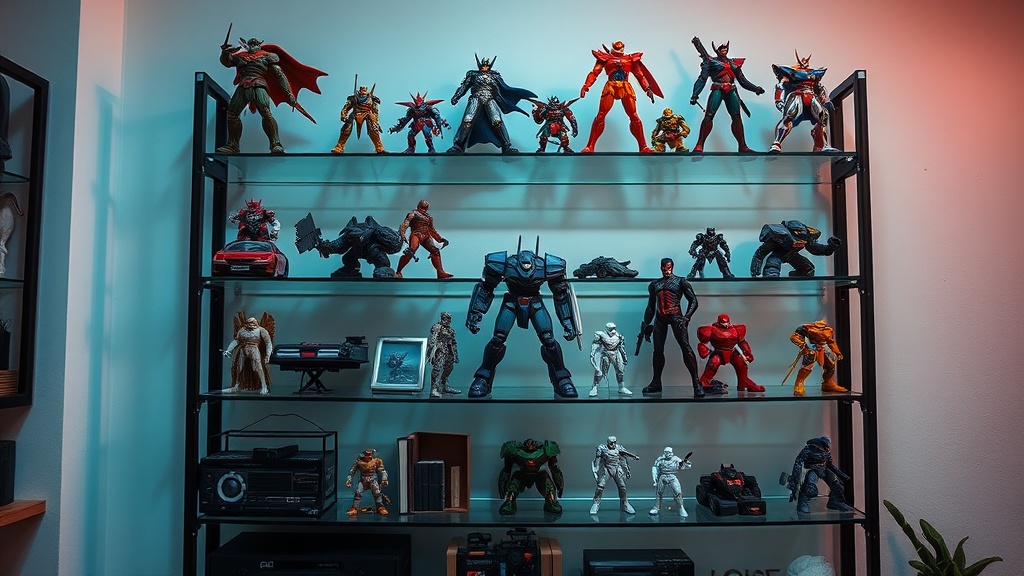
Setting Up Your Figure Display Shelves for Long-Term Stability

Practical Setup for Figure Displays
This guide covers the structural requirements for building a stable display system for your action figures, vinyl collectibles, and statues. You'll learn how to select shelving materials, manage weight distribution, and prepare your surfaces to prevent shelf collapse or figure tipping. Getting this right prevents much more than just a broken figure; it protects your entire collection from structural failure.
Many collectors focus solely on the aesthetic side of displays—the lighting, the backdrop, or the color coordination—but they often ignore the physical-mechanical reality of their shelves. A shelf that looks good today might sag under the weight of a heavy resin statue six months from now. You need to think about weight limits, shelf material, and how much vibration your furniture can handle before things start sliding.
Choosing the Right Shelving Material
The material of your shelf dictates how much weight it can carry without bowing. While wood looks great in a home setting, it can sometimes warp if it isn't treated or if it's part of a low-quality particle board unit. Acrylic or glass shelving is popular because it offers high visibility, but it carries specific risks. Glass is heavy, and if you have a large collection of heavy 1/6 scale figures, the weight of the glass itself plus the figures can lead to unexpected cracking.
If you're using a standard bookcase, check the thickness of the boards. Thin, laminated particle board is a common culprit for shelf failure. If you see even a slight curve in the middle of a shelf, it's already under too much stress. For heavy collectors, I suggest looking into metal-frame shelving or solid wood units that can handle the load without bending. If you want to check the actual density or weight-bearing standards for different materials, the ScienceDirect database often has technical papers on material stress, though that's a bit deep for a hobbyist, it proves the point: physics doesn't care about your collection's beauty.
How do I prevent figures from sliding off shelves?
One of the most common frustrations is the "shelf slide." This happens when a shelf is slightly tilted, or when vibrations from a nearby door slam or heavy footsteps move your figures. You don't want to use permanent adhesives—that's a recipe for disaster—but you do need some form of friction control.
- Museum Wax: This is a non-permanent, removable putty used to secure items to a surface. It's perfect for lightweight figures that tend to tip.
- Clear Acrylic Risers: Instead of placing a figure directly on the shelf, use a riser. This adds height and provides a more stable base.
- Silicone Grip Mats: Small, transparent silicone dots can prevent a figure's feet from sliding during a minor vibration event.
I've seen many collectors ruin a perfectly good display because they didn't account for the vibration of a vacuum cleaner or a heavy door closing nearby. A little bit of friction goes a long way in keeping your figures upright and centered.
How much weight can my display hold?
This is the question that determines if your shelf stays upright or ends up in pieces on the floor. You have to calculate the weight of your figures—especially if you collect heavy resin statues or high-end die-cast figures. A single high-end statue can weigh several pounds. If you line up ten of them on a single shelf, you've just added a significant load to that specific point in the bookcase.
To avoid a disaster, use the "distributed weight" method. Instead of clustering all your heaviest pieces in the center of a single shelf, spread them out across multiple levels. If you're using a glass display case, always check the manufacturer's weight capacity. Most high-end display cases like those from Vitrine or similar specialized manufacturers will list a weight limit per shelf. Never guess—always check the specs. If you're unsure, weigh a single figure on a kitchen scale and multiply it by the number of figures you plan to display. If that number is close to the limit, you're playing with fire.
Is lighting a risk to my shelf structure?
While most people worry about light damaging the paint on their figures, lighting also affects the shelf itself. Heat is the enemy here. If you use traditional incandescent bulbs in a closed display case, the heat buildup can actually affect the structural integrity of certain plastics or even the shelf material if it's low-grade. LED lighting is the industry standard for a reason—it stays cool.
Even with LEDs, you need to ensure that the wiring isn't being pinched by the weight of the figures or the shelf itself. A pinched wire can cause a short or even a small fire, which is the ultimate nightmare for a collector. Always route your cables through dedicated channels or behind the shelf to prevent them from being crushed. This keeps the aesthetic clean and ensures the safety of your entire collection.
When you're setting up, don't just place things and walk away. Go back a week later and check for any signs of bowing or shifting. A well-built display is a dynamic thing that reacts to its environment. By focusing on the physical-mechanical aspects of your shelving, you ensure that your collection remains safe, visible, and perfectly positioned for years to come.