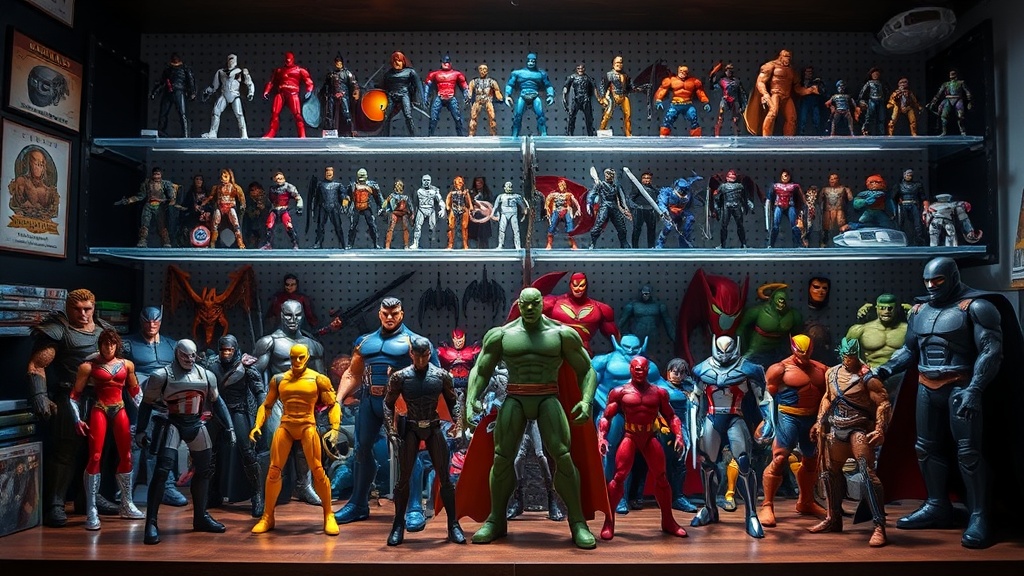
How to Organize Your Action Figure Collection Like a Pro

This guide breaks down practical, proven methods for organizing action figures — from sorting systems and storage solutions to display strategies that protect the condition and value of a collection. Whether dealing with fifty figures or five hundred, a well-organized collection saves time, reduces damage risk, and makes the hobby more enjoyable. There's no single right way (every collector's situation differs), but the approaches outlined here work across the spectrum — from loose vintage G.I. Joes to sealed Marvel Legends and high-end imports.
What's the Best Way to Categorize an Action Figure Collection?
The answer depends on how the collection gets used. Most collectors benefit from sorting by franchise first, then drilling down into subcategories. A Marvel collector might separate by team — Avengers, X-Men, Spider-Verse — while a Star Wars collector could organize by era (Original Trilogy, Prequel, Sequel, Expanded Universe).
That said, franchise isn't the only approach worth considering:
- By scale: Grouping 3.75-inch, 6-inch, and 12-inch figures separately keeps proportions consistent on shelves
- By manufacturer: Hasbro, Mattel, NECA, McFarlane Toys, SH Figuarts, and Mezco each have distinct aesthetics that some collectors prefer to keep together
- By release year: Chronological organization works well for completists tracking a line's evolution
- By character: A Batman collector might want every version of the Dark Knight displayed as a centerpiece
The catch? Hybrids often work best. A collection might be sorted by franchise, then by scale within each franchise. The key is consistency — once a system gets established, stick with it. Changing approaches every few months leads to chaos (and wasted time re-sorting).
For digital tracking, Figure Realm offers a database where collectors can catalog items, track values, and even print collection labels. ToyARK and Fwoosh forums also maintain comprehensive checklists for major lines like Marvel Legends, Black Series, and Masters of the Universe.
How Do You Store Action Figures Without Damaging Them?
Climate control matters more than most collectors realize. Action figures — especially those with rubber joints, soft goods, or painted details — degrade in heat, humidity, and direct sunlight. Ideal storage conditions fall between 60-75°F with relative humidity around 50%. Basements and attics? Generally terrible choices unless climate-controlled.
Storage Solutions by Collection Size
| Collection Size | Recommended Storage | Cost Range | Best For |
|---|---|---|---|
| 25-50 figures | Stack-on drawers, Really Useful Boxes 64L | $30-$80 | Loose figures, accessories |
| 50-200 figures | IRIS Weathertight boxes, Sterilite gasket boxes | $80-$250 | Carded figures, seasonal rotation |
| 200+ figures | Chrome wire shelving, heavy-duty plastic bins with dividers | $250-$600 | Long-term storage, bulk organization |
| High-end/display | Detolf cabinets, Billy bookcases with glass doors | $100-$400 per unit | Valuable pieces, active display |
For loose figures, individual bagging prevents paint transfer and accessory loss. Small zip bags (2x3 inches for accessories, 4x6 for figures) work well. Some collectors use compartment organizers — the Plano 3700 series tackle boxes remain popular for accessory sorting, with adjustable dividers and secure latches.
Carded figures present different challenges. The plastic bubbles on vintage packaging become brittle over time. Storing carded figures horizontally (bubble-up) reduces stress on the glue bonds. For high-value carded items, acrylic cases — available from companies like GWA Cases — provide rigidity and UV protection.
Here's the thing about rubber bands and twist ties — remove them. Over years, they degrade, stick to plastic, and leave permanent marks. The same goes for those clear rubber bands holding weapons in place. Better to store accessories separately than risk damage.
What's the Most Effective Way to Display Action Figures?
Effective display balances visibility, protection, and available space. The IKEA Detolf glass cabinet remains the gold standard for mid-range collectors — four adjustable shelves, dust protection, and a small footprint (about 16x16 inches) that fits most rooms. At around $80-100 depending on location, it's hard to beat for value.
That said, Detolfs aren't perfect. The glass shelves hold only about 15-20 pounds — fine for standard 6-inch figures, risky for 1/6 scale or statues. The back is open (not mirrored), and the door seal isn't airtight. For truly valuable pieces, consider adding weatherstripping around the door frame.
Shelving and Display Options
Floating shelves offer another approach. The lack of visible brackets creates a clean look, though weight limits vary dramatically by mounting hardware. Sturdy options like the Grail shelves from collectors' specialty shops support 20+ pounds — enough for most figure ranges.
Bookcases work too, with modifications. Standard particleboard shelves sag over time under figure weight. Reinforcing with metal L-brackets or replacing with plywood helps. Adding acrylic risers creates multiple display levels, putting back-row figures at eye level.
For lighting, LED strips have largely replaced hot halogen options. Warm white (2700-3000K) shows paint details without the harshness of cool white. Battery-powered puck lights work well inside cabinets without running wires. Worth noting: UV light damages plastics and fades packaging. Any display lighting should be low-UV LED, and direct sunlight should be blocked entirely.
How Do You Keep Track of Accessories and Small Parts?
Lost accessories rank among the most frustrating collector experiences. That tiny blaster or alternate hand disappears, and suddenly the figure feels incomplete. A systematic approach to parts management prevents this.
For figures still in rotation (being posed, photographed, or displayed), assign a dedicated "parts box" per figure or per shelf section. Small labeled containers — craft bead organizers, pill cases, or even repurposed Altoids tins — keep pieces corralled. The Akro-Mils 24-compartment cabinet offers a drawer-based system popular with customizing collectors.
Photography helps too. Before disassembling a figure for storage, take a photo of all components laid out. Store this image with the figure (printed and bagged, or digitally filed). When that figure comes back out, there's a reference for what should be present.
Customizers and kitbashers face amplified parts challenges. Sorting by type (heads, torsos, limbs, weapons, bases) often works better than by figure origin. Small parts drawers with label holders — the kind used in hardware stores — scale well for large parts collections. Harbor Freight's 20-bin and 40-bin portable parts storage cases run $5-15 and withstand heavy use.
Dealing with Dust and Maintenance
Dust isn't just unsightly — it's abrasive. Over time, dust particles scratch paint and cloud clear plastics. Regular maintenance extends figure life significantly.
For displayed figures, a monthly once-over with a microfiber cloth (the kind used for eyeglasses) removes surface dust. Compressed air (held at least 6 inches away) clears joints and crevices. For deeper cleaning, a soft makeup brush (unused, obviously) reaches into sculpted details.
Stored figures need less attention — every six months to a year suffices unless the storage environment is dusty. When rotating figures between storage and display, inspect for any changes: sticky surfaces (plasticizer migration), discoloration, or joint looseness. Catching issues early prevents permanent damage.
What About Protecting Figure Value Long-Term?
Condition drives value in the collectibles market. Even common figures fetch premiums when pristine, while rare figures lose significant worth with damage. Organization plays a direct role in preservation.
Documentation matters. Maintain a spreadsheet (or use collection management software) tracking purchase date, price, condition grade, and storage location. Photos of each figure — front, back, any flaws — create a record for insurance purposes. Speaking of insurance, standard homeowner's policies often cap collectibles coverage. A scheduled personal property rider provides better protection for valuable collections.
For high-value pieces, consider the "holy trinity" of protection: climate control, UV protection, and physical security. A temperature-stable room, away from windows, with locked display cases or a secure storage room covers all three bases. Some collectors use silica gel packets in storage bins to control humidity — replace or recharge them quarterly.
The reality? Most collections aren't investment portfolios. They're hobbies, expressions of passion, connections to childhood. The best organizational system is the one that keeps figures accessible, protected, and enjoyable. A collection locked away in perfect conditions but never viewed misses the point. Balance preservation with the pleasure of ownership — that's the mark of a collector who's truly organized like a pro.
Steps
- 1
Sort and categorize your collection by series, scale, or theme
- 2
Choose appropriate storage containers and display cases
- 3
Arrange figures with proper spacing, lighting, and protective measures